
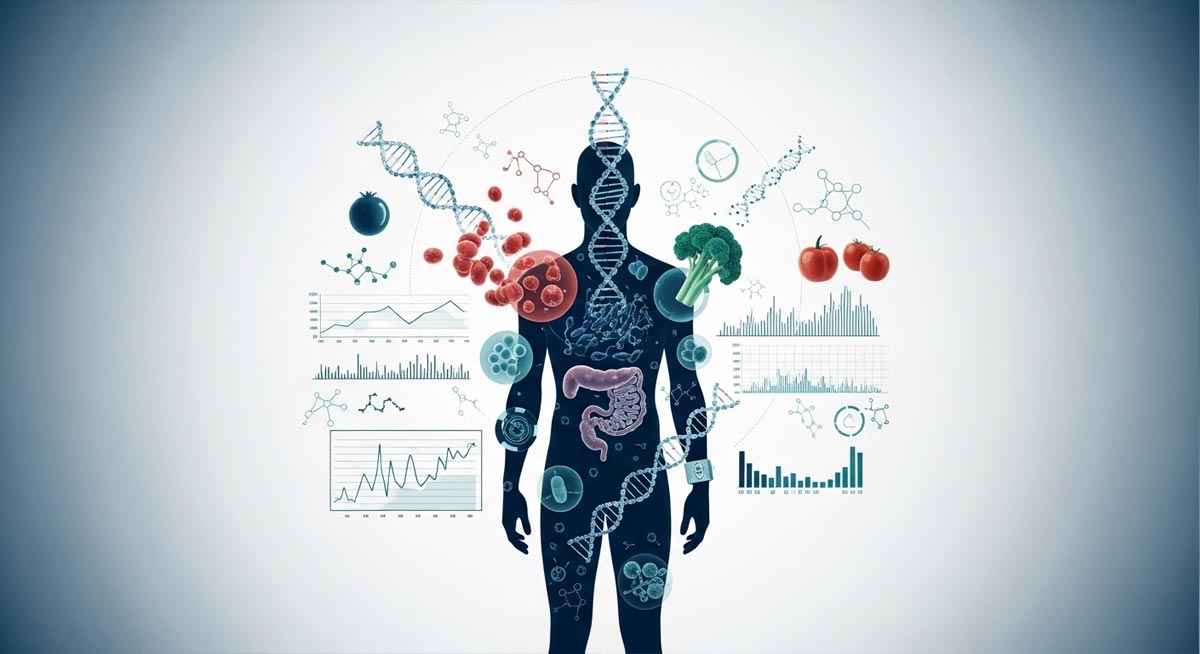

How Useful Have Gene-Based Diets and Weight Management Really Been? A Decade of Promise and Limits
— 2026-03-29How Far Has the “DNA Diet” Really Come?
When an NIH working group raised the question in late 2015, it captured a hope that had been building for years: if people respond differently to the same diet, exercise plan, and weight-loss program, perhaps their genes could help explain why. And if those differences could be decoded, obesity care might eventually move away from one-size-fits-all advice toward something more precise. Even then, the mood was cautious rather than triumphant. Genetic influence on body weight was clear, but the evidence was still too thin to translate that knowledge directly into practical weight-management strategies. A decade later, that caution looks remarkably well judged.

Over the past ten years, science has made one point far clearer than before: obesity is not simply a matter of willpower. Appetite, satiety, food reward, energy expenditure, fat storage, and insulin response are all shaped, at least in part, by biology. Some people may be less sensitive to fullness cues. Others may be more vulnerable to hunger after a meal, or more prone to regain weight after losing it. Genetics has become an important language for understanding why body weight varies so much from person to person. The harder question was always what to do with that information. Could genetic data actually tell someone whether a low-fat diet, a low-carbohydrate diet, or some other approach would work better for them? That is where the story became much more complicated.
For a time, the marketplace offered a seductive answer. People were told they might be “low-carb types,” “low-fat types,” or genetically predisposed to certain eating patterns. The pitch was simple: test a handful of genes, then match the diet to the DNA. But the science never settled into that tidy a picture. Common obesity is not driven by one or two powerful genes. It is a highly polygenic condition, shaped by hundreds or thousands of small genetic effects interacting with sleep, stress, medications, food environment, physical activity, socioeconomic conditions, and long-term behavior. Genes matter, but the number on the scale is rarely moved by genes alone.
Recent randomized trials have reinforced that reality. In the 2026 MyGeneMyDiet study, adults with overweight or obesity were assigned to either gene-based lifestyle recommendations or standard weight-loss advice. Both groups lost weight, but the gene-based group did not show a clear, decisive advantage on the outcomes that matter most, including body weight, BMI, waist circumference, and body fat. There were some differences in dietary intake patterns, but not enough to transform the clinical picture. No single trial can close the case, but this study made one thing harder to claim with confidence: that adding genetic testing, by itself, reliably produces better weight-loss results than standard evidence-based care.
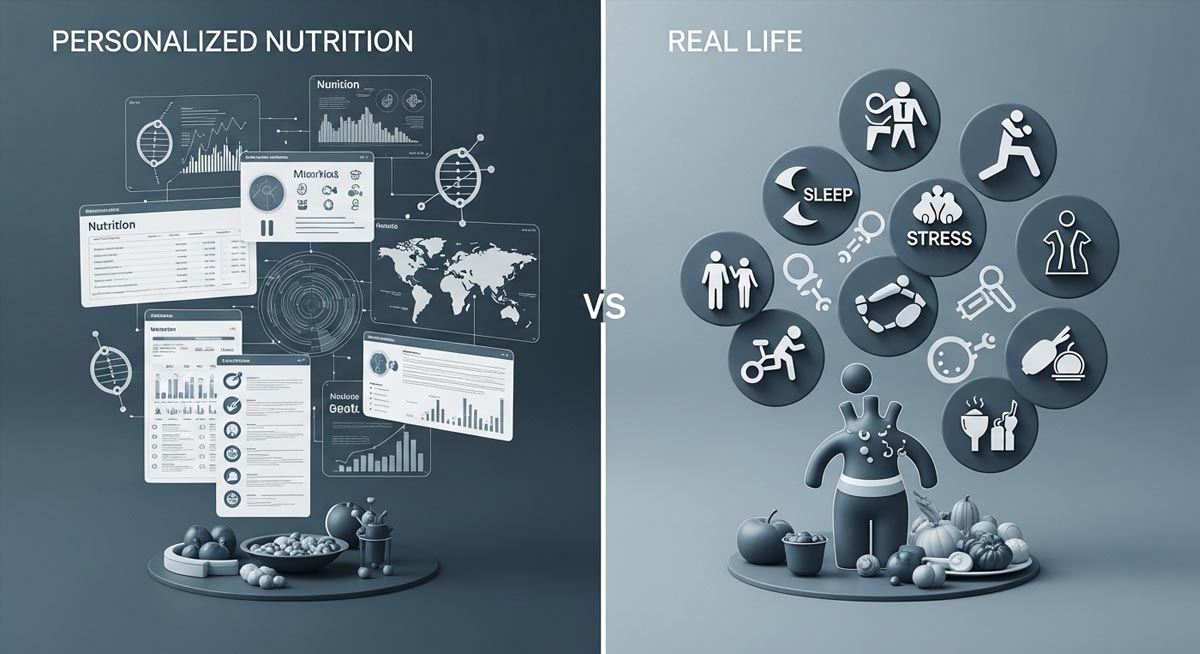
Still, it would be unfair to read the last decade as a story of failure. The field has matured by asking better questions. Instead of asking whether genes alone can prescribe the right diet, researchers are increasingly asking whether genetic information becomes more useful when combined with gut microbiome data, post-meal glucose responses, metabolomics, wearable monitoring, and real-world behavioral data. That broader framework is what precision nutrition now increasingly means. The most promising future was never likely to come from a DNA report in isolation, but from multiple layers of biological and lifestyle information interpreted together.
Polygenic scores have also changed the conversation. By 2025, increasingly refined BMI-related polygenic scores were showing stronger power to predict who is at higher lifetime risk of obesity. That is important, but it is not the same as knowing which diet will work best for a particular person. In fact, some studies suggest that people with higher genetic risk may lose slightly more weight during the first year of intensive lifestyle treatment, only to face greater difficulty maintaining that loss later on. In other words, genetics is becoming better at prediction than prescription. It can increasingly help identify vulnerability, but it does not yet provide a complete dietary roadmap.
There is, however, one area where genetics has begun to deliver very real clinical value: rare forms of monogenic or syndromic obesity. In these patients, the issue is not merely a statistical tendency toward weight gain but a specific biological pathway gone awry, often involving the leptin-melanocortin system. Here, genetic diagnosis can point directly toward treatment. Setmelanotide has become one of the clearest examples of this shift, showing meaningful effects in certain rare genetic obesities and, more recently, in acquired hypothalamic obesity. In these cases, the most important question is not “Which diet matches my genes?” but “What is the underlying biological cause of this obesity, and can it be targeted?” That is precision medicine in its strongest form.
That distinction matters because it helps separate scientific progress from commercial oversimplification. Consumer-facing “DNA diet” services often imply that a few common variants can neatly sort people into dietary categories. But biology is rarely so obliging. A person may carry genetic variants associated with appetite regulation, another with weight regain, another with insulin handling, and yet another may be most affected by sleep deprivation, chronic stress, or ultra-processed food exposure. The real-world phenotype emerges from all of these forces together. The lesson of the past decade is not that genetics was irrelevant, but that its meaning was often overstated when stripped from the rest of the picture.
So how should gene-based diets and weight management be judged after ten years? Probably with less hype and less cynicism. The field did not fulfill the early consumer promise that a genetic test would reveal the perfect diet for everyone. But neither did it collapse into irrelevance. It helped deepen the understanding of obesity as a biologically complex condition rather than a moral failing. It sharpened the distinction between common polygenic obesity and rare genetic obesity. It improved risk prediction. And it pointed toward a more sophisticated future in which genes may become one useful layer among many, rather than a standalone answer.
That may be the most reasonable ending point for now. Knowing one’s genetic profile is not a magic key, but it is not meaningless either. For some people, it may offer a framework for understanding appetite, satiety, or vulnerability to weight regain. For a few, it may raise suspicion of an undiagnosed genetic form of obesity. For many, it may simply be one more lens through which to understand why their body responds differently from someone else’s. The important thing is not to mistake that information for a verdict. A genotype is not destiny, and it is not a complete treatment plan. But as part of a broader, better-grounded understanding of metabolism and health, it is not a bad place to begin. In that sense, the past decade did not prove that DNA could solve weight management. It showed instead that genetic information may still earn a place in the conversation—provided we ask of it only what science can honestly support.
References
-
Bray MS, Loos RJF, McCaffery JM, et al. Using Genomic Information to Guide Weight Management: From Universal to Precision Treatment. Obesity (Silver Spring). 2016;24(1):14-22.
-
Ulusoy-Gezer HG, Rodríguez-Pérez C. The Future of Obesity Management through Precision Nutrition. Curr Obes Rep. 2024.
-
Nacis JS, Vallente LL, Angeles-Agdeppa I, et al. Effect of gene-based vs. standard weight-loss recommendations on anthropometry, lipid and glucose markers, and dietary intake: a randomized controlled trial (the MyGeneMyDiet Study). 2026.
-
Smit RAJ, et al. Polygenic prediction of body mass index and obesity through the life course. Nat Med. 2025.
-
Roth CL, et al. Setmelanotide for the treatment of acquired hypothalamic obesity. Lancet Diabetes Endocrinol. 2024.
Related Articles
-
-

YOUR GUIDE TO SHEEP PLACENTA
2021-11-18 -

Coronavirus: Stem Cell therapy
2020-03-03 -

Stem Cell Therapy will help hearing loss.
2015-10-19 -

Every cell, off the peg
2015-10-19 -

Cell and number
2015-08-25 -

Technology innovation and Regulatory system
2015-08-23 -

Birth month and disease
2015-06-17 -

How can we get adult stem cells?
2015-04-27 -

Creating stem cell specimen bank
2015-06-12 -

-

The face edema looks older than one’s age.
2015-05-14 -

How to retain youth
2015-05-05 -
Diabetes and Stem Cell Therapy
2015-06-21 -

-
Bio Trends

The cells began to divide.
— 2015-04-27The cells began to divide. How many human cells die daily? For adults it’s about 50-70 billion per day. Surprising?…
-
Health Care & Ageless

How can we get adult stem cells?
— 2015-04-27Stem Cell Collection, Stem Cell Collecting, Stem Cell Harvesting Stem cells could be collected from our body’s various tissues as…
-
Statistics Research

Average life span and Healthy span
— 2015-04-28Average life span and Healthy span in Korea, 2014. The gap between average life span and healthy span is…
-
Slow Aging Research
How to retain youth
— 2015-05-05Doctors say how to retain youth. 1. Anti-wrinkle : Taking enough water is more important than using a anti-wrinkle…
 English
  Korean
  Japanese
Leave a reply
You must be logged in to post a comment.